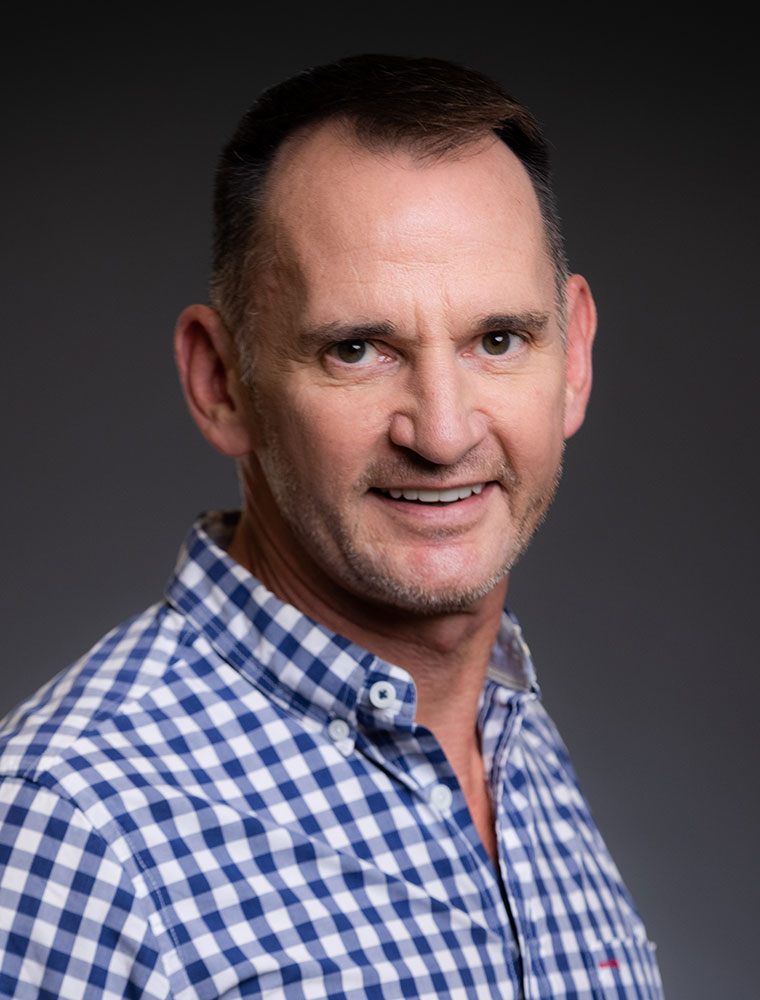
BS, Lafayette College. MS, PhD, University of Virginia. Special interests in mathematics education, game theory, history and philosophy of mathematics, and the outreach of mathematics to the social sciences and the humanities. Author of research papers in the areas of nonassociative algebra, fair-division theory, and mathematics education; former chair and governor of the Metropolitan New York Section of the Mathematical Association of America; former member of the Board of Editors, The College Mathematics Journal. SLC, 1997–
Research Interests
Special interests in mathematics education, history and philosophy of mathematics, game theory, fair division theory, social choice theory, abstract algebra, applied statistics, and the outreach of mathematics to areas in the social sciences; author of research papers in the areas of Jordan theory, nonassociative superalgebras, fair division theory, mathematics education and mathematical literature.
Undergraduate Courses 2024-2025
Mathematics
An Introduction to Statistical Methods and Analysis
Open, Lecture—Spring
MATH 2024
Variance, correlation coefficient, regression analysis, statistical significance, and margin of error—you’ve heard these terms and other statistical phrases bantered about before, and you’ve seen them interspersed in news reports and research articles. But what do they mean? How are they used? And why are they so important? Serving as an introduction to the concepts, techniques, and reasoning central to the understanding of data, this lecture course focuses on the fundamental methods of statistical analysis used to gain insight into diverse areas of human interest. The use, misuse, and abuse of statistics will be the central focus of the course; and specific topics of exploration will be drawn from experimental design theory, sampling theory, data analysis, and statistical inference. Applications will be considered in current events, business, psychology, politics, medicine, and many other areas of the natural and social sciences. Statistical (spreadsheet) software will be introduced and used extensively in this course, but no prior experience with the technology is assumed. Group conferences, conducted in workshop mode, will serve to reinforce student understanding of the course material. This lecture is recommended for anybody wishing to be a better-informed consumer of data and strongly recommended for those planning to pursue advanced undergraduate or graduate research in the natural sciences or social sciences. Enrolled students are expected to have an understanding of basic high-school algebra and plane coordinate geometry.
Faculty
Calculus I: The Study of Motion and Change
Open, Seminar—Fall
MATH 3005
Our existence lies in a perpetual state of change. An apple falls from a tree; clouds move across expansive farmland, blocking out the sun for days; meanwhile, satellites zip around the Earth transmitting and receiving signals to our cell phones. The calculus was invented to develop a language to accurately describe the motion and change happening all around us. The ancient Greeks began a detailed study of change but were scared to wrestle with the infinite, and so it was not until the 17th century that Isaac Newton and Gottfried Leibniz, among others, tamed the infinite and gave birth to this extremely successful branch of mathematics. Though just a few hundred years old, the calculus has become an indispensable research tool in both the natural and social sciences. Our study begins with the central concept of the limit and proceeds to explore the dual processes of differentiation and integration. Numerous applications of the theory will be examined. For conference work, students may choose to undertake a deeper investigation of a single topic or application of the calculus or conduct a study of some other mathematically-related topic. This seminar is intended for students interested in advanced study in mathematics or sciences, students preparing for careers in the health sciences or engineering, and any student wishing to broaden and enrich the life of the mind.
Faculty
Previous Courses
Mathematics
An Introduction to Statistical Methods and Analysis
Open, Lecture—Spring
Variance, correlation coefficient, regression analysis, statistical significance, and margin of error...you’ve heard these terms and other statistical phrases bantered about before, and you’ve seen them interspersed in news reports and research articles. But what do they mean? And why are they so important? Serving as an introduction to the concepts, techniques, and reasoning central to the understanding of data, this lecture course focuses on the fundamental methods of statistical analysis used to gain insight into diverse areas of human interest. The use, misuse, and abuse of statistics will be the central focus of the course; and specific topics of exploration will be drawn from experimental design theory, sampling theory, data analysis, and statistical inference. Applications will be considered in current events, business, psychology, politics, medicine, and other areas of the natural and social sciences. Statistical (spreadsheet) software will be introduced and used extensively in this course, but no prior experience with the technology is assumed. Group conferences, conducted in workshop mode, will serve to reinforce student understanding of the course material. This lecture is recommended for anybody wishing to be a better-informed consumer of data and strongly recommended for those planning to pursue advanced undergraduate or graduate research in the natural sciences or social sciences.
Faculty
Calculus II: Further Study of Motion and Change
Open, Seminar—Spring
This course continues the thread of mathematical inquiry following an initial study of the dual topics of differentiation and integration (see Calculus I course description). Topics to be explored in this course include the calculus of exponential and logarithmic functions, applications of integration theory to geometry, alternative coordinate systems, infinite series, and power series representations of functions. For conference work, students may choose to undertake a deeper investigation of a single topic or application of the calculus or conduct a study of some other mathematically-related topic. This seminar is intended for students interested in advanced study in mathematics or sciences, students preparing for careers in the health sciences or engineering, and any student wishing to broaden and enrich the life of the mind. The theory of limits, differentiation, and integration will be briefly reviewed at the beginning of the term.
Faculty
Discrete Mathematics: Gateway to Higher Mathematics
Intermediate, Seminar—Fall
There is an enormous, vivid world of mathematics beyond what students encounter in high-school algebra, geometry, and calculus courses. This seminar provides an introduction to this realm of elegant and powerful mathematical ideas. With an explicit goal of improving students’ mathematical reasoning and problem-solving skills, this seminar provides the ultimate intellectual workout. Five important themes are interwoven in the course: logic, proof, combinatorial analysis, discrete structures, and philosophy. For conference work, students may design and execute any appropriate project involving mathematics. A must for students interested in pursuing advanced mathematical study, this course is also highly recommended for students with a passion for computer science, engineering, law, logic, and/or philosophy.
Faculty
Game Theory: The Study of Conflict and Strategy
Open, Lecture—Spring
Warfare, elections, auctions, labor-management negotiations, inheritance disputes, even divorce—these and many other conflicts can be successfully understood and studied as games. A game, in the parlance of social scientists and mathematicians, is any situation involving two or more participants (players) capable of rationally choosing among a set of possible actions (strategies) that lead to some final result (outcome) of typically unequal value (payoff or utility) to the players. Game theory is the interdisciplinary study of conflict, whose primary goal is the answer to the single, simply-stated, but surprisingly complex question: What is the best way to “play”? Although the principles of game theory have been widely applied throughout the social and natural sciences, their greatest impact has been felt in the fields of economics, political science, and biology. This course represents a survey of the basic techniques and principles in the field. Of primary interest will be the applications of the theory to real-world conflicts of historical or current interest.
Faculty
Mathematics and Jorge Luis Borges
Open, Seminar—Fall
The works of Jorge Luis Borges, the highly influential 20th-century Argentine writer, feature imaginatively intelligent and deeply provocative use of mathematical ideas and imagery. Borges’s writings—primarily short stories, essays, and poetry—describe fictitious worlds that warp standard notions of time, space, and existence and reveal the unavoidable friction between competing notions at the heart of modern mathematics: the infinite versus the finite versus the infinitesimal (set theory); the discrete versus the continuous (calculus); the reasonable versus the paradoxical (logic); the Euclidean versus the otherworldly (geometry); the symmetric versus the distorted (fractals, chaos); the convergent versus the divergent (limits, series); the improbable versus the impossible (combinatorics, probability). In short, this seminar will explore various fundamental and foundational topics in mathematics from a Borgesian perspective. Student conference projects for this seminar may focus upon the mathematical themes in the works of other writers or explore any mathematically-themed subject.
Faculty
Mathematics in Theory and Practice: Probability, Risk Analysis, and Optimization
Intermediate, Seminar—Year
What is chance, and how do we measure it? Do we measure the probability of winning the Mega Millions lottery in the same way that we assess the likelihood of a volcanic eruption in Hawaii? What tools are available to understand and measure uncertainty and risk? How can an understanding of probabilities better inform the decisions that we make in our personal and professional lives? How can we make the very best choice(s) amidst an enormous number of available options? How can individuals and businesses make critical decisions with confidence despite incomplete information and considerable uncertainty of future states? This calculus-based introduction to advanced probability theory, risk analysis, and operations research (optimization theory) engages these topics with an eye on diverse applications in the natural sciences, business, economics, and the social sciences. Topics of exploration will include the essential preliminaries of discrete mathematics (symbolic logic, proof technique, and set theory), combinatorial probabilities, distributions of prominent discrete and continuous random variables (Gaussian normal, binomial, Poisson, etc.), conditional probability and independence, joint distributions, expectation, variance, covariance, laws of large numbers, the Central Limit Theorem, Bayes Theorem, Markov chains, stochastic processes, linear programming and the powerful simplex method, sensitivity of optimized solutions to slight shifts in input parameters, duality theory, integer programming, nonlinear optimization, stochastic programming, and the four classic examples of optimization theory (the transportation/assignment problem, the network-flow problem, the diet problem, and the traveling-salesman problem). Using mathematical software, students will gain practical experience in the art of computer simulation and optimal solution identification.
Faculty
Mirrors, Labyrinths, and Paradoxes: Mathematics and Jorge Luis Borges
Open, Seminar—Spring
Many of the works of Jorge Luis Borges—the highly influential, 20th-century Argentine writer and oft-cited founder of the magic realism literary genre—mirror mathematical concepts in profoundly intelligent and strikingly imaginative ways. Borges’ writings—primarily short fictions but also essays and poetry—often introduce alternate realities that warp standard notions of time, space, and even existence. Borges' works serve to uncover intriguing frictions between competing notions in the foundations of mathematics: the sensible vs. the paradoxical (logic), the infinite vs. the infinitesimal (set theory), the discrete vs. the continuous (analysis), the symmetric vs. the distorted (fractals and chaos), the convergent vs. the divergent (limits), and the likely vs. the impossible (probability). Not restricting itself to mathematics, this course will also explore themes and images in Borges’ works from philosophical, mythological, historical, scientific, psychological, and literary perspectives. Student conference work may focus upon other explorations at the intersection of literature, magic realism, mathematics, philosophy, etc. This course is intended for the student who is curious and open-minded though had never planned to study mathematics at the college level.
Faculty
Modern Mathematics: Logic, Risk, Analytics, and Optimality
Open, Seminar—Year
There is great elegance in the fact that mathematics can be both deeply theoretical and magnificently useful. This course, available to both first-year students (as an FYS) and upper-class students (as an open seminar), explores the theory of optimization and its profound applications. We will study and employ elements in the toolbox of mathematics—specifically logic, probability, game theory, and operations research—for the purpose of optimization. In various and diverse settings, our goal will be to identify the single optimal choice amidst a sea of available options to determine the optimal decision despite a cloud of incomplete information and the mystery of an uncertain future and to select the optimal mode of behavior (strategy) in situations of personal or professional conflict. Specific applications of the mathematical theory will be explored through case-study analysis in business, biology, psychology, sociology, education, politics, law, literature, and art (among others). For example: How should SLC most effectively assign courses to students during Registration Week based on students’ indicated course preferences? How should United Airlines most efficiently route its planes to meet the transportation needs of its customers? How can Rubik’s Cubes be used in mass to most accurately reproduce Leonard da Vinci’s Mona Lisa? How can jointly-owned possessions be most fairly divided in an inheritance or divorce settlement? Specific topics of study in this calculus-based course will include topics in the foundation of mathematics (logic, proof technique, set and function theory); probability theory (combinatorics, discrete and continuous random variables, conditional probability, independence, expectation, Bayes Theorem); game theory (zero-sum conflicts, cooperative solutions); and analytics (linear programming, the simplex method, sensitivity analysis, duality theory, decision theory). Students pursuing this course should have prior working knowledge of single-variable differential and integral calculus (one year of high-school study or one semester of college study). Conference work can focus on any topic relating to mathematics. Students taking the course as an FYS seminar will meet with the instructor for individual conferences and donning weekly in fall and biweekly in spring. Enrolled upper-class students will conference with the instructor biweekly across both terms.
Faculty
Multivariable Mathematics: Linear Algebra, Vector Calculus, and Differential Equations
Intermediate, Seminar—Year
Rarely is a quantity of interest—tomorrow’s temperature, unemployment rates across Europe, the cost of a spring-break flight to Fort Lauderdale—a simple function of just one primary variable. Reality, for better or worse, is mathematically multivariable. This course introduces an array of topics and tools used in the mathematical analysis of multivariable functions. The intertwined theories of vectors, matrices, and differential equations and their applications will be the central themes of exploration in this yearlong course. Specific topics to be covered include the algebra and geometry of vectors in two, three, and higher dimensions; dot and cross products and their applications; equations of lines and planes in higher dimensions; solutions to systems of linear equations, using Gaussian elimination, theory and applications of determinants, inverses and eigenvectors, volumes of three-dimensional solids via integration, spherical and cylindrical coordinate systems, and methods of visualizing and constructing solutions to differential equations of various types. Conference work will involve an investigation of some mathematically-themed subject of the student’s choosing.
Faculty
Additional Information
Activities
SLC Mathematical Resource Center
Co-Director
Providing assessment, counseling, and tutoring for students wishing to strengthen their mathematical skills.
Current committees
Curriculum Committee, Committee on Academic Preparation of Teachers
Former committees
Advisory Committee on Appointments and Tenure, General Committee, Web Advisory Committee, Advisory Committee for the Center for Continuing Education, Substance Use Committee, Admissions Committee, Sports Center Committee, Budget Committee
Professional affiliations
Metropolitan New York Section of the Mathematical Association of America (MAA)
Governor
A professional society of over 1,000 mathematicians in the greater New York City area focused on enhancing undergraduate mathematics education.
The College Mathematics Journal
Member of Board of Editors
A publication of the Mathematics Association of America that publishes articles, short Classroom Capsules, problems, solutions, media reviews and other pieces specifically aimed at the college mathematics curriculum with emphasis on topics taught in the first two years.
Section NExT: New Experiences in Teaching
Co-founder
A program aimed at supporting new and rising Ph.D's in mathematics or mathematics education. Section NExT is a local version of the highly successful national MAA program Project NExT. Like Project NExT, Section NExT's goal is to support new and pre-tenured faculty who are interested in improving the teaching and learning of undergraduate mathematics. Section NExT aims to provide New York area mathematicians who have recently entered the profession with practical information about, and concrete suggestions for, implementing more effective pedagogical and professional strategies, ranging from new teaching methods to writing grant proposals and balancing teaching and research responsibilities.
Selected Publications
Mathematical Ideas and Images in the Works of Jorge Luis Borges
(In progress with students N. Mendoza, H. Mezzabolta, N. Scott and C. Wolf)
An Interesting Application of Multivariable Calculus to Marine Biology Research
(In progress with Ray Clarke)
Efficient Fair Division: Helping the Worst Off or Avoiding Envy?
Rationality and Society
17, no. 4, November 2005
From Calculus to Topology: Teaching Lecture-Free Seminar Courses at all levels of the Undergraduate Mathematics Curriculum
PRiMUS (Problems, Resources, and issues in Mathematics Undergraduate Studies)
September, 2002
Quadratic Jordan Superalgebras
Communications in Algebra
29 (2000), 375-401
The Kantor Doubling Process Revisited
Communications in Algebra
23 (1995), 357-372 (with Kevin McCrimmon)
The Split Kac Superalgebra K10
Communications in Algebra
22 (1994), 29-40
The Kantor Construction of Jordan Superalgebras
Communications in Algebra
20 (1992), 109-126 (with Kevin McCrimmon)
Lectures, Talks and Presentations
Win, Lose or Draw (But Most Likely Win!): The Mathematics of TV Game Shows
Science Seminar Series, Sarah Lawrence College, Bronxville, NY, November 2010
The Mathematics of Conflict: Games Against Gods and Criminals
Mount Saint Mary College, Newburgh, NY, November 2010
What’s Wrong with the Electoral College? Historical and Mathematical Perspectives
Dutchess Community College, Poughkeepsie, NY, September 2009
Jorge Luis Borges and Mathematics
Oberlin College, Oberlin, OH, April, 2008